
Everything's Gucci at Alpine (?)
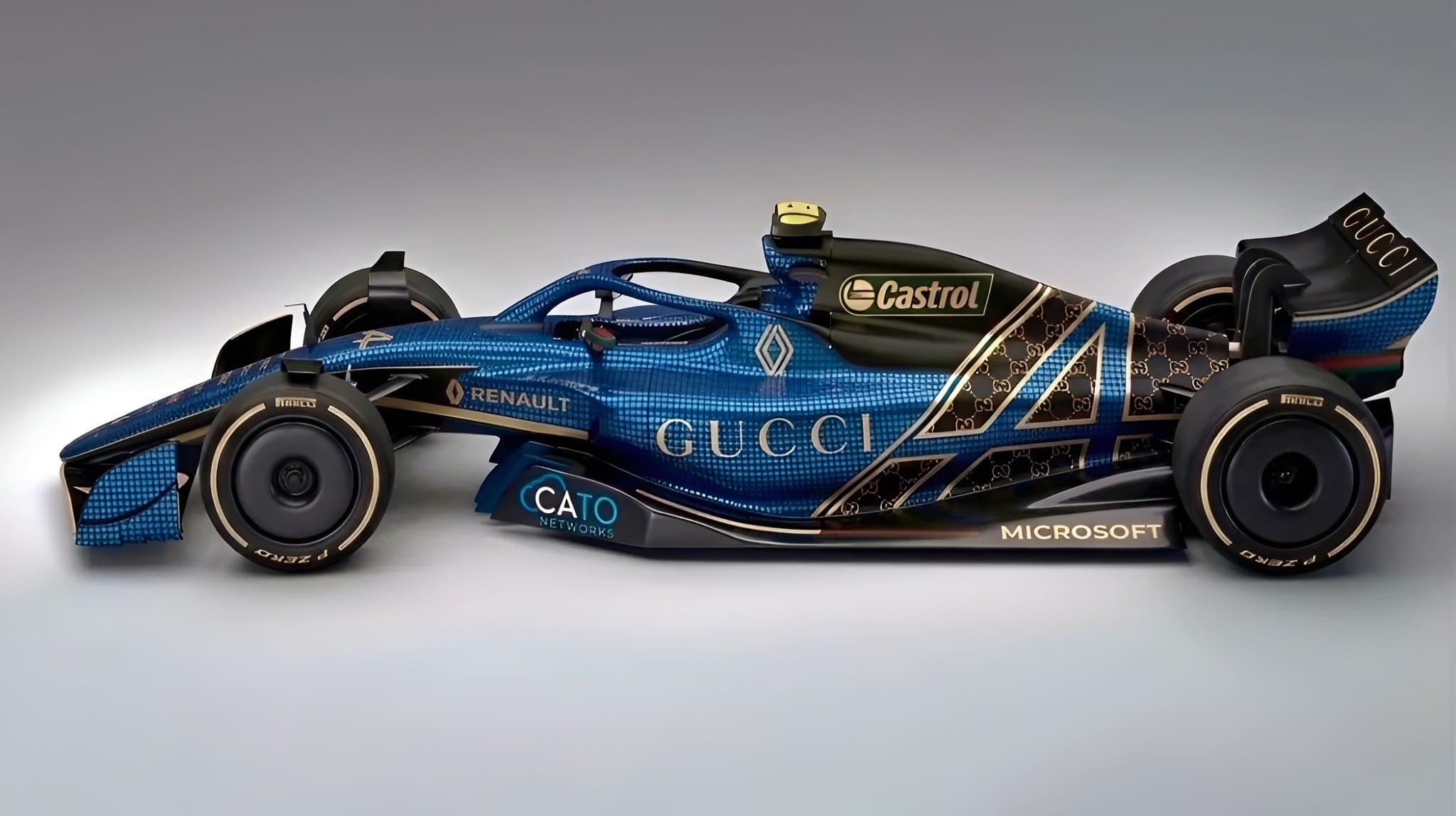
Gucci becomes Alpine's title sponsor from 2027 in a landmark deal for F1. The numbers are real, the commercial logic holds - but will any of it actually make the car faster?
There is a version of this story where you write the headline, type "Gucci becomes Alpine's title sponsor" and spend 600 words telling people why luxury brands in Formula 1 are a natural fit and isn't it all terribly exciting. That version is accurate, easy, and slightly dishonest, because it skips over the parts that require actual examination.
The Flavio Factor
None of this happens without Flavio Briatore. That is not an opinion, it is just the truth of how this deal came together. A personal relationship with Luca De Meo, who moved from Renault to Kering, who owns Gucci, who now wants to be in Formula 1. Pull any of those threads and you get back to Flavio.
I'll be honest: I wasn't expecting him back in Formula 1 at all. When Alpine brought him in as executive adviser and then effectively handed him the reins, my first instinct was not excitement. The man was handed an indefinite ban from the sport after Crashgate - the 2008 Singapore Grand Prix, where Nelson Piquet Jr. was, by his own account, ordered to deliberately crash his Renault to manufacture a safety car that gifted Fernando Alonso a race win from fifteenth on the grid. The ban was later overturned by a French court, and Briatore still denies he ordered it. You can make of that what you will. I know what I make of it.
“Whatever else Briatore is, he is a monster of a businessman who has a habit of being in the right room at the right time and making things happen.”
Strip out the moral ledger for a moment and look at what he has actually done since returning: killed the Renault engine programme, which took serious nerve and earned serious enemies at Enstone, and replaced it with the best power unit currently in Formula 1. Got Mercedes in the back of the car. And now this. The calls have been right so far. I'm watching carefully.
Gucci in F1 - Does It Actually Fit?
Luxury brands belong in Formula 1. They always have. Rolex has been plastered across the sport for years. LVMH - the largest luxury conglomerate on the planet - has become F1's official luxury partner at series level. The paddock has always been where wealth goes to be seen. Pretending otherwise is a purist affectation more than a serious position.
What is genuinely new here is the scale and the directness of the commitment. Gucci is not a Rolex trackside board. It is not a logo on someone's lapel. It is the title partner of a Formula 1 team, and reportedly the first luxury fashion house ever to hold that position in F1. That is a real landmark, not a press release landmark. Fifty to sixty million dollars a year, three years, a bespoke sub-brand called Gucci Racing, black and gold livery with a touch of Alpine blue. That is a statement.
Does the brand fit feel organic? Mostly yes. Alpine is, at least nominally, a luxury car brand. Both are chasing the same demographic: younger, increasingly female, high-spending, global. Gucci's own data apparently points to the average F1 fan now being 32. Five years ago they were told it was 55. That is an extraordinary audience shift, and it explains why a brand that does not need Formula 1 for awareness has decided it wants Formula 1 for access. Is it entirely coincidence-free that this particular luxury brand landed at this particular midfield team rather than, say, Ferrari or McLaren? No. That is Flavio's address book at work. But the logic holds even without the personal angle.
The Actual Question Nobody Wants To Answer
Will any of this make Alpine faster? Probably not directly, no.
The budget cap means you cannot simply pour title sponsorship money into aerodynamic development. The $50-60 million a year does not automatically become half a second of lap time. What it does is provide financial stability, improve the team's ability to attract staff, and signal to people considering joining Alpine that there is something real here worth committing to.
That matters because Alpine's core problem for the last several years has not been money. It has been everything else. Look at their constructor standings since reforming as Alpine: fifth in 2021, fourth in 2022 - the high watermark - then sixth in both 2023 and 2024, dead last in 2025 with 22 points. Last. In a field of ten teams. The team that had Fernando Alonso in it, won races under the Renault name, finished fourth in the championship just three years earlier, finished tenth. That is not a funding problem. That is an organisation problem.
“Fourth in 2022. Sixth, sixth, last. The arc is not encouraging when you squint at it without the current optimism applied.”
I have seen this Alpine trajectory story before. The promising signs, the right-sounding announcements, the apparent upward momentum, and then the ceiling arriving on schedule and the whole thing quietly unravelling. This is a team with a track record of bouncing off its own potential rather than breaking through it. Briatore himself, to his credit, is not pretending otherwise. When asked what is still missing, his answer was essentially: half a second, and more good people. That is an unusually honest self-assessment from someone running a Formula 1 team. No manufactured deadlines, no outlandish promises. He knows where the gaps are.
The Engine Question
The Mercedes switch deserves more credit than it generally gets. When Briatore killed the Renault power unit programme - the in-house engine that the team had built its entire identity around for decades - the reaction in some quarters was outrage. Understandably so, particularly from the Renault side.
But it was the right call, and there were not many viable alternatives. You either persist with an engine falling further behind, or you find the best customer deal available and focus resources on the chassis. Briatore chose the latter, chose Mercedes, and Alpine now have access to the same hardware as the works team. That is not nothing.
Gasly, Colapinto, and the Elephant in the Garage
Gasly was always fine - quietly excellent when the car has given him anything to work with. Colapinto is the more interesting story. He had a very difficult stretch where it looked like he might be the driver question mark that derailed everything else. But the recent run - Miami and now Canada especially - has been a different animal. He is doing the right things, and if he keeps it up there is no reason to change.
The Alonso whisper is floating around at the edges of these conversations as it always does. I don't think it happens, and I'm not sure it would make much sense at this stage. But I have watched Fernando turn up in the most unexpected places at the most unexpected times for long enough to know I wouldn't bet against it. With Flavio as his manager and Flavio running the team, stranger things have already happened. It would be quite something - a fourth stint at the same team he kept leaving.
Cautious Eyebrow, Not Open Arms
Gucci is a genuine landmark deal, reportedly the first luxury fashion title sponsorship in Formula 1 history, worth real money, backed by real commitment and a coherent commercial logic. The Mercedes engine is the right decision validated. The driver lineup is stable and increasingly functional. The organisation is being rebuilt with some apparent seriousness this time.
- Deal reportedly worth $50-60m per year over three years, up from BWT's estimated $25-30m
- Gucci Racing sub-brand created; black and gold livery with some Alpine blue retained
- Briatore confirmed as the personal architect of the deal via his Kering/Luca De Meo relationship
- Budget cap limits how directly sponsorship money translates to car performance
- Alpine finished last in 2025; the improvement this year is real but the bar was very low
- Mercedes power unit already the most significant performance upgrade in the team's recent history
The question mark in this headline is doing real work. Alpine has been here before - at the front of the midfield, with momentum, with positive press, with a credible-sounding plan. The ceiling has arrived before. The chaos has arrived before. The people have left before.
What is different this time is Briatore's realism and the absence of the delusional target-setting that defined the previous era. Whether that is enough to finally convert Alpine from a team that has potential into a team that fulfils it - that is still genuinely open. Check back in 2028. If this is still a coherent project moving forward rather than the latest installment of the same story, then yes: everything really is Gucci.

